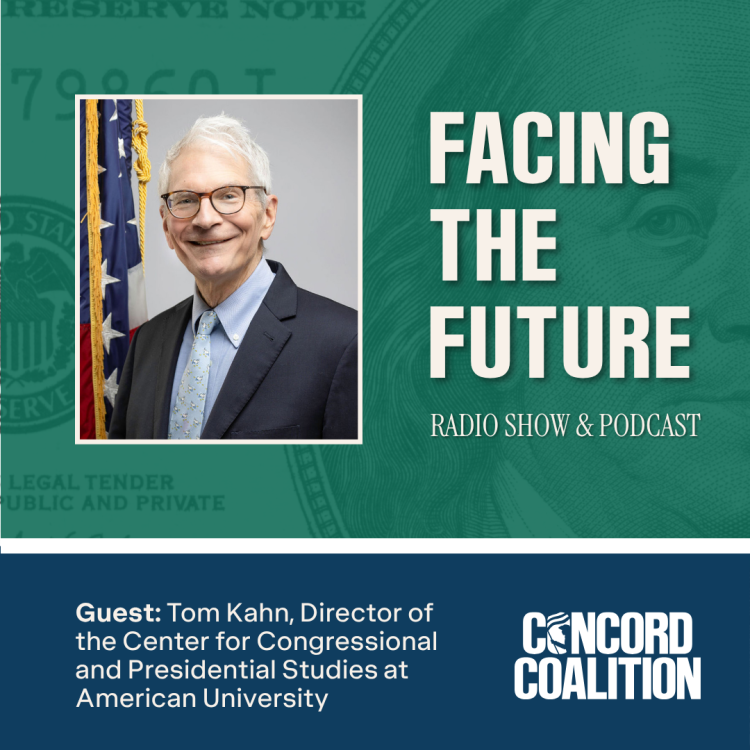
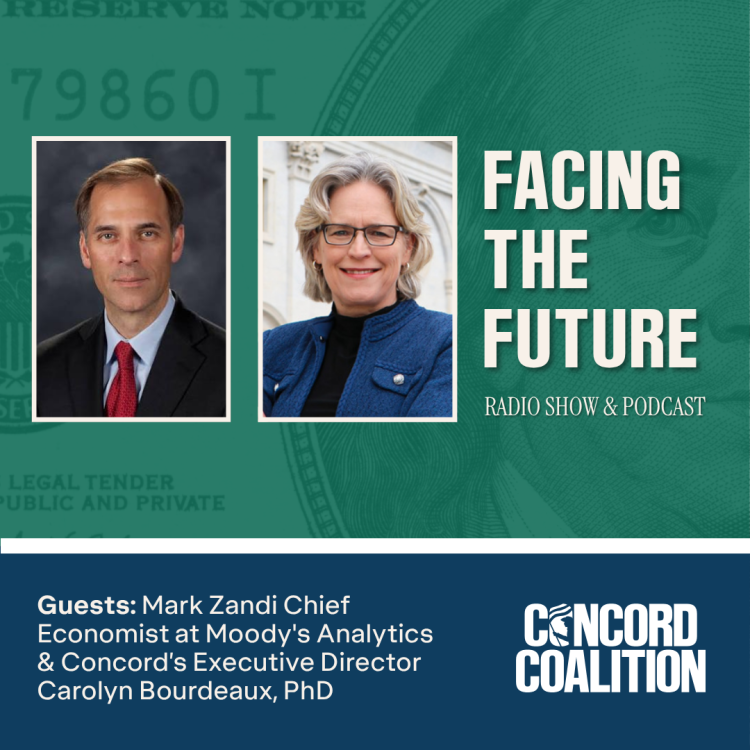
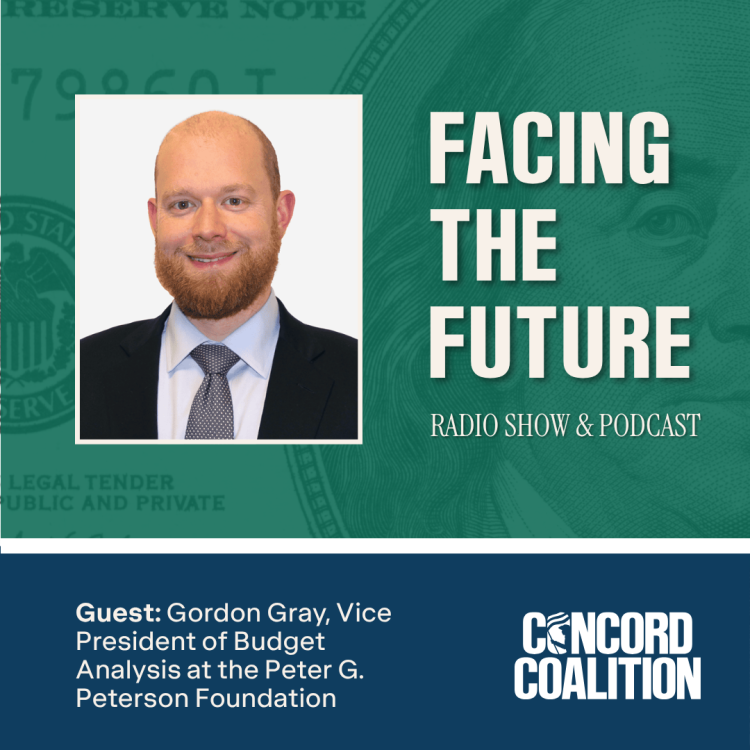
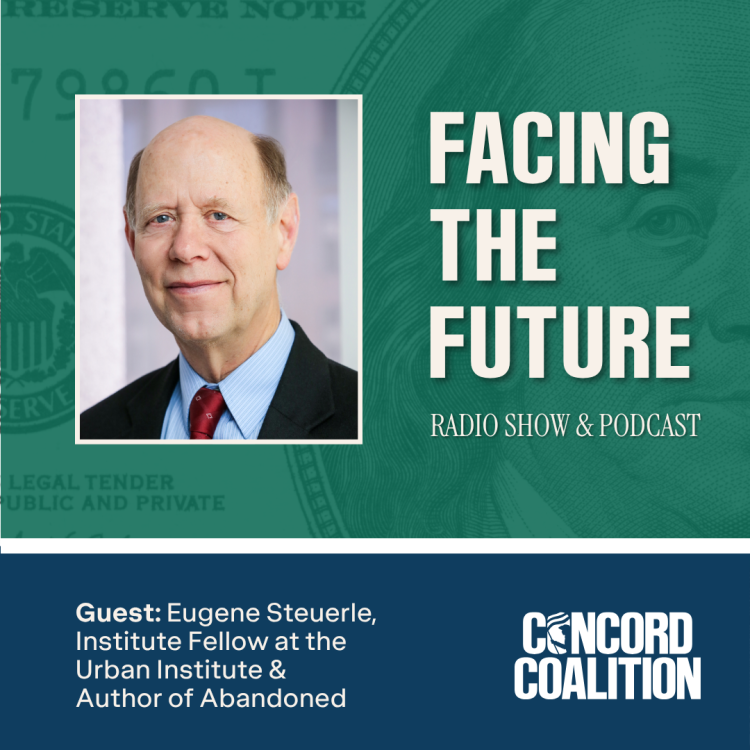
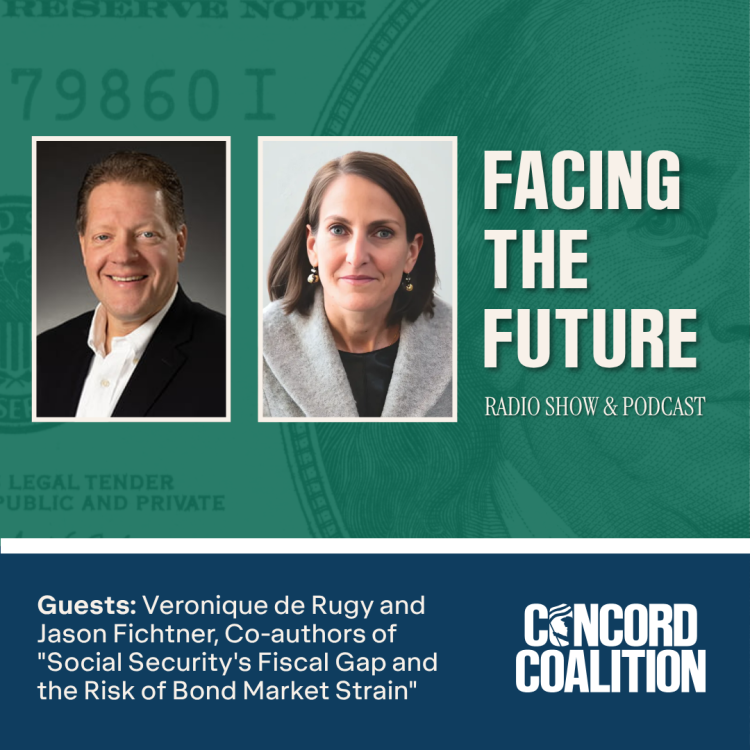
This week on Facing the Future, we focus on a fiscal “Doomsday” scenario. Many guests on this show have observed that the national debt is on an unsustainable path. So we have been asking a series of prominent guests from both parties if there is a fiscal “Doomsday” scenario in which it becomes too late to avoid an economic calamity, what could trigger such a crisis, and whether we are getting close to the brink. On this week’s show we bring together some of the most illuminating, if unsettling, responses.
Leon Panetta, a former Defense Secretary and Director of the Office of Management and Budget (OMB) in Democratic administrations, set the stage saying, “We have a record debt. We’re paying interest on that debt of almost a trillion dollars a year now, more than we spend on defense, more than what we spend on healthcare. And it is threatening our economic future. I don’t think there’s any question that we are on the verge of an economic crisis when you combine the fact that we have this huge debt and that Social Security and Medicare are going broke in the next few years, and nobody seems to be very concerned about what we do in order to deal with those huge problems.”
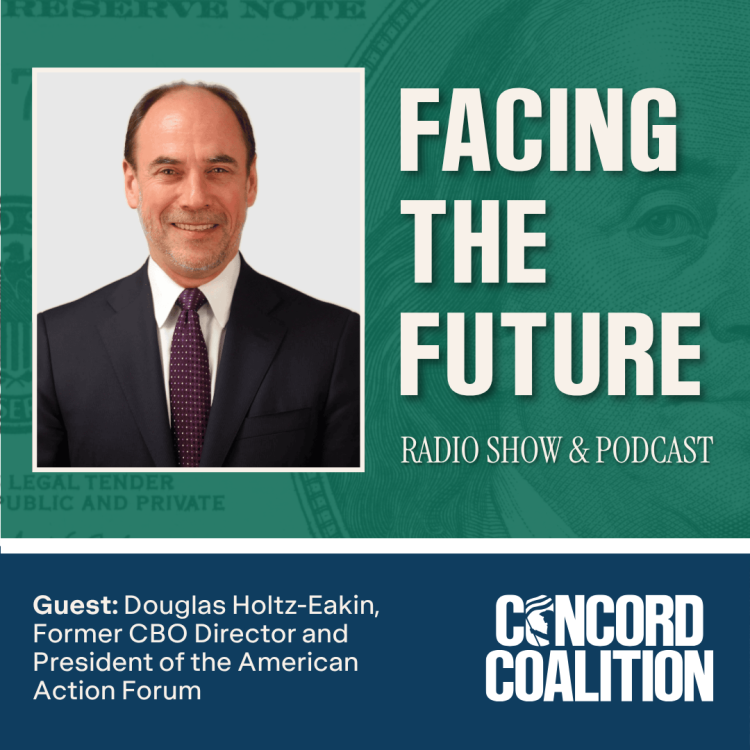
Douglas Holtz-Eakin, an economic adviser in the George W. Bush Administration and former Director of the Congressional Budget Office (CBO) elaborated on how a crisis could play out: “You get an interest rate spike, the world starts charging you a lot more interest because you’re a less reliable debtor, and they want to get their money back quickly, and they want a lot of it in case you ultimately don’t fully repay, and that spike starts a recession. And the recession exacerbates the revenue problem to begin with, and the spike becomes even bigger, or you just get cut off entirely, and people stop lending to you. So now you have a genuine domestic and economic crisis unfolding. And simultaneously, you can’t borrow anymore, at least internationally, and in a recession, there’s going to be no great domestic lending. And so you have to do some really, really, really bad news things in a recession. You have to raise taxes sharply and quickly, and you have to have draconian cuts in spending that you can cut. So in the US, the discretionary spending gets slashed, and taxes go up, and in the middle of a recession, that’s bad. So there’s no good news for the average American in that scenario. It’s just bad.”
Dennis Lockhart, former President and CEO of the Federal Reserve Bank of Atlanta and member of the Fed’s Open Market Committee, explained how a crisis could impact the lives of everyday Americans: “Interest rates would rise, particularly higher long-term rates, which are what the public cares most about, the cost of owning a home, or buying a home, auto rates, and investment rates for corporations. Rate-sensitive sectors would take a hit, probably fairly quickly. The most rate-sensitive sectors are housing and autos. Then if it’s serious enough, the psychology would spread to other sectors in the economy. The financial sector itself could end up in distress. And all that would lead to a recession. It’s a question of how deep a recession, and how long a recession. But the longer we let this go without addressing, in a fundamental way, how we manage the fiscal business of the country, I would argue, the more severe is going to be the recoiling once it happens. And therefore, it’s better to deal with it early or now, because the price you’ll pay at a later date has a good chance of being much more severe in terms of recession, employment, businesses that fail, on a fairly dramatic basis.”
While most of the guests were reluctant to put a date on the timing of a crisis, Heather Long, chief economist at Navy Federal Credit Union was the exception. “Whenever people say, is this really an issue? Is there ever going to be a debt crisis? I say, my prediction is around 2030. If we haven’t had some crazy crisis by then, we will, because either the bond market will act, or at the end of 2032 Social Security payments will be automatically reduced, and the typical recipient will suddenly get $500 to $700 less a month. That’s riot-in-the-street territory. That impacts a lot of people, not to mention the younger generations freaking out that they’ll never get any Social Security down the line, or almost nothing, and so that’s going to force action.”
Former Indiana Governor Mitch Daniels raised some concerns beyond economics: “What has always troubled me at least as much as the economic crunch that would come – skyrocketing prices and suddenly people finding all necessities unaffordable – is the sense of social betrayal that I think would come with it when people were told, ‘sorry can’t send you that social security check. Can’t see you under Medicare for months and months.’ The shock and surprise that unfortunately too many people who’ve been misled about this would experience at that time could lead to consequences as deleterious really as the economic wreck that all this would cause.”
Daniels observed, however, that “Americans have proven themselves to be a resourceful and resilient, creative people before. I believe we still are. I think we’re going to address this problem and that we might come out of a difficult period damaged, but ready for greater greatness than we’ve already displayed as a people.”
Hear more on Facing the Future. Concord Coalition Senior Advisor Bob Bixby hosts the program each week on WKXL in Concord N.H., and it is also available via podcast. Join us as The Concord Coalition team discusses issues relating to national fiscal policy with budget experts, industry leaders, and elected officials. Past broadcasts are available here. You can subscribe to the podcast on Spotify, Pandora, iTunes, Google Podcasts, Stitcher, or with an RSS feed. Follow Facing the Future on Facebook, and watch videos from past episodes on The Concord Coalition YouTube channel.