The Penny Game provides an introduction to the elements and numbers in the federal budget. The activity works well for all ages.
What is the Penny Game?
- 15-minute activity
- Appropriate for elementary and middle schools
- Group exercise with 4-5 people per group
- Suitable for any class size
Help your students understand the basics of balancing the federal budget.
Preparation
- Prepare a bag of 100 pennies* for each team. You will need red tape to cover some of the pennies.
- Make copies of Income and Spending Boards using card stock or colored paper.
*You can use white and red beans instead of pennies.
Penny Game Overview
In Fiscal Year 2025, the Federal Government spent $7,010 billion, collected $5,235 billion in taxes, and borrowed $1,775 billion to cover the deficit.
When using the game boards, each penny will represent 1% or approximately $70 billion of 2025 federal spending.
You should have 75 bare pennies to represent the amount of taxes collected by the government. You should cover 25 pennies with red tape to represent the money borrowed and spent by the government (since 25% less money was collected than spent.)
How to Play:
- Group players into teams of 4 or 5.
- Give each team a Penny Bag and a Spending Board.
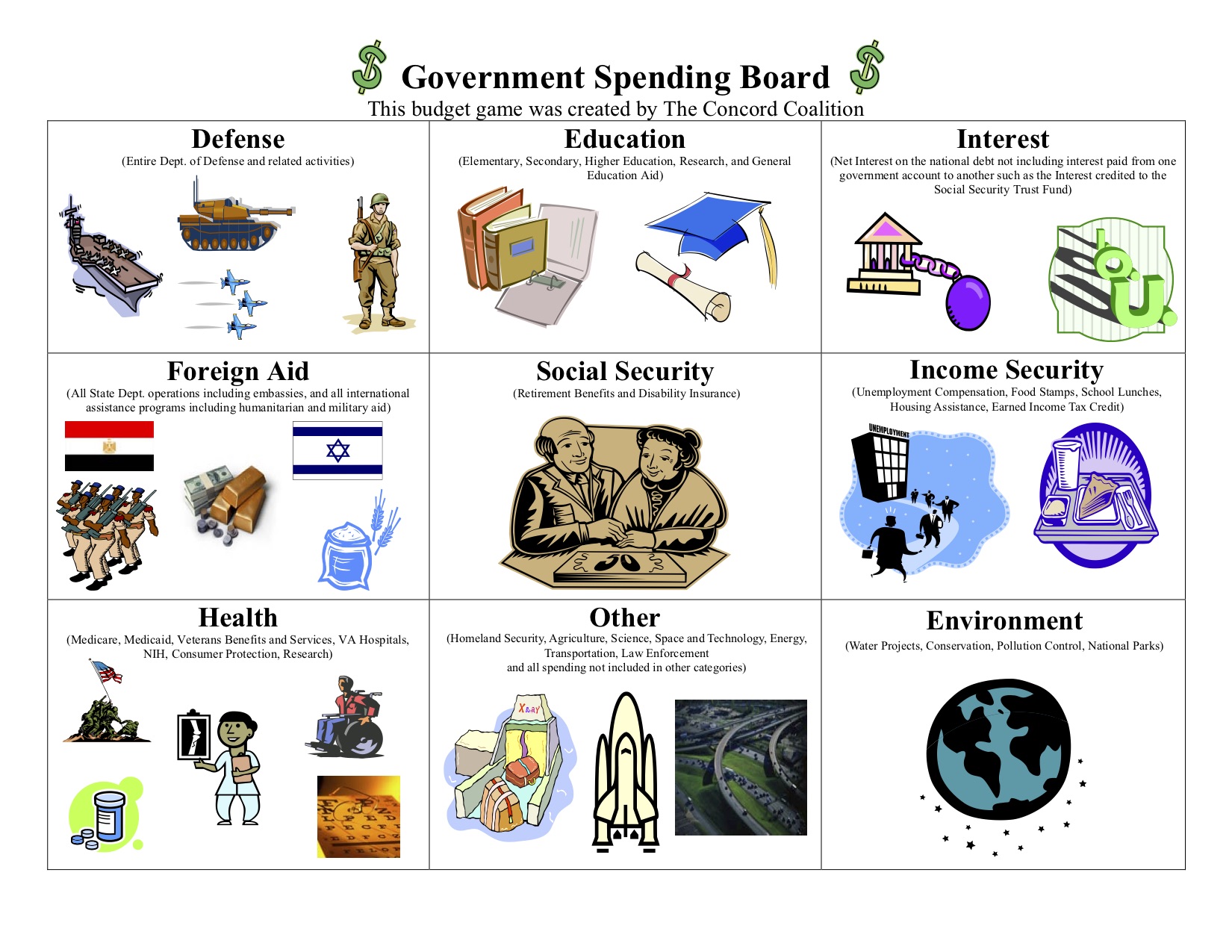
- Ask teams to distribute all 100 pennies among the 9 spending categories according to where they think the government spent the money.
- Get the answers below and read them out. Ask each team to move the correct amounts onto the squares so they can visualize the comparisons.
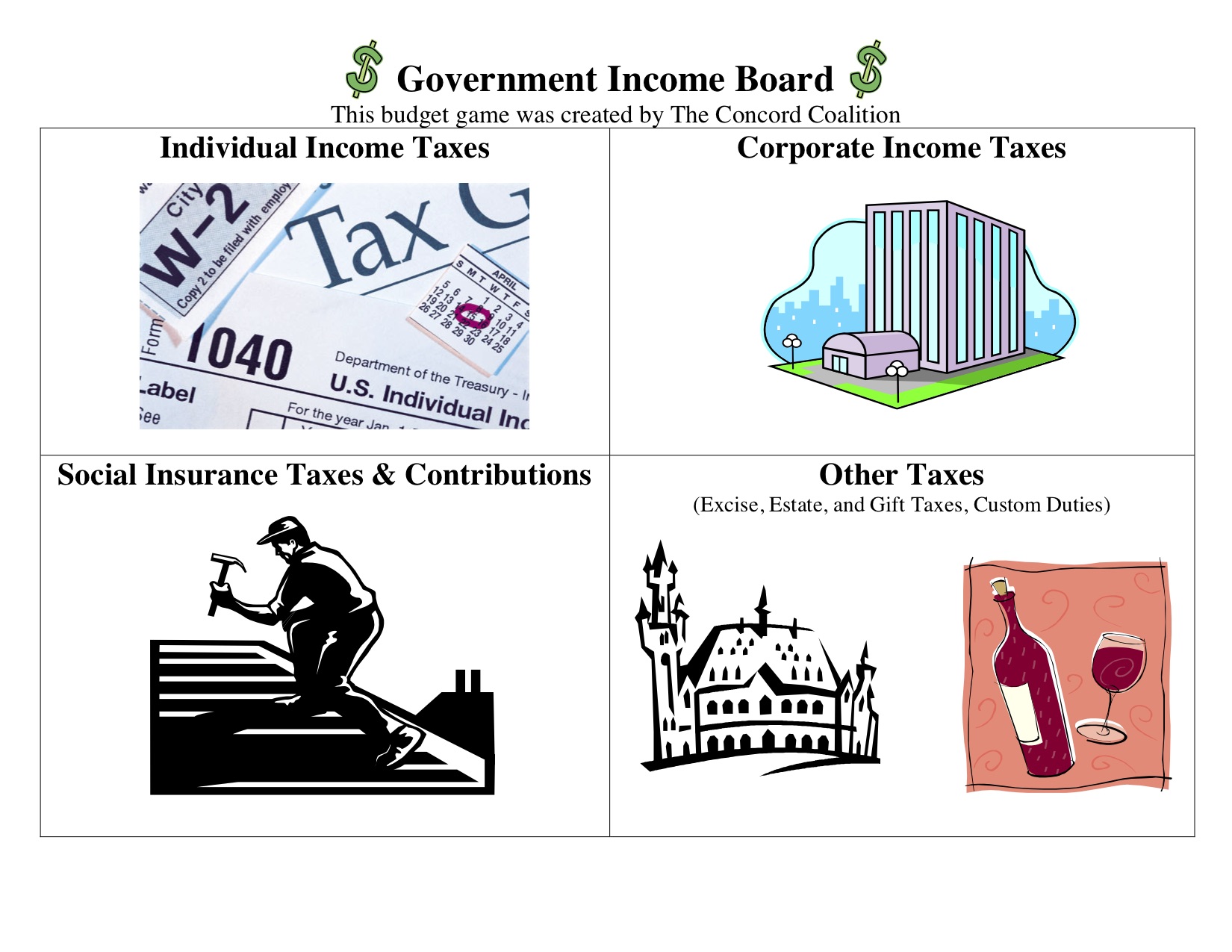
- Ask teams to distribute only the bare pennies onto the 4 tax squares of the Income Board according to where students think the taxes came from.
- When the Income Board is completed, give the correct answers as shown below.
Additional Information
- The income figures are represented as a percentage of outlays. 2025 income was 75% of outlays, which is another way of saying we had an 25% deficit.
- The categories for the Penny Game track the official “Functions” breakdown in the federal budget. For more on the definitions of the different budget functions and the programs within each function click here.