This week on Facing the Future, we discussed the prospect of a government shutdown when the fiscal year ends at the end of September. In addition, we got an update on the growth of tariff revenue and the president’s “pocket rescission” request. Rachel Snyderman, Director of Economic Policy at the Bipartisan Policy Center (BPC), and Caleb Quakenbush, Associate Director of the BPC’s Economic Policy Program, walked us through the issues.
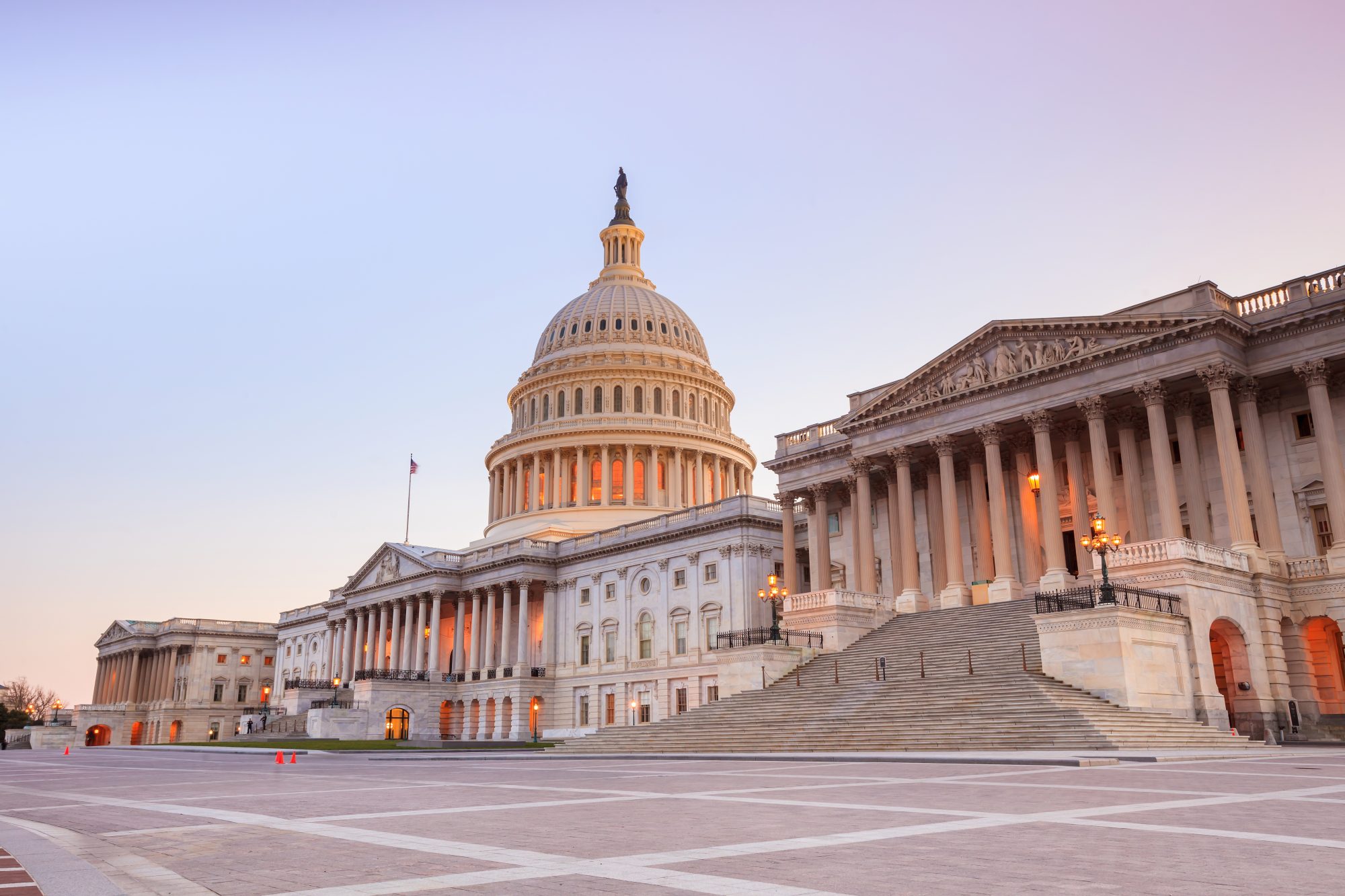
Snyderman explained why a shutdown is back on the table: “Government funding will run out at midnight on September 30th, for the current fiscal year, and we are not in a situation right now where lawmakers on Capitol Hill have agreed on how to fund the government for the next fiscal year, which starts on October 1st. And so, what they are going to need to do, with the limited time left in the month and the days in session, is to come together and pass some sort of negotiation. Now, whether that be all 12 appropriations bills, I think that is an extraordinarily tall order. However, Congress has done amazing things at the 11th hour. But what’s most likely is that they will come together on a stopgap funding measure, which is known as a continuing resolution (CR), which essentially funds the government at current levels.”
How long the CR lasts could be a matter of contention. Snyderman said, “Whether this be a short-term CR or a longer-term CR that could play out into the next calendar year, either of those right now just create uncertainty for agencies, as they’re trying to plan. So, making sure that these negotiations continue, on pace and are delivered before that September 30th deadline is what’s paramount.”
One issue that could complicate funding negotiations is the President’s latest rescissions request, which was delivered so late in the fiscal year that Congress does not have the full 45 days prescribed by the Impoundment Control Act (ICA) to consider it. This maneuver is known as a “pocket rescission,” and the Trump Administration says it can withhold the funds without congressional approval until those funds expire on September 30. The Government Accountability Office (GAO) has said that pocket rescissions violate the rescissions process set out in the ICA.
The legality of pocket rescissions will likely play out in the Supreme Court, but Snyderman observed that there could be more immediate consequences for budget negotiations. “This could really put a damper on the potential for bipartisan cooperation if, for example, Democrats are wary that any bipartisan compromise that they come to this year could later be undermined by a subsequent rescissions package or a pocket rescission very late in the next fiscal year,” she said.
Turning to the subject of tariffs, which are also the subject of litigation, Quakenbush commented on the spike in revenues they have provided.
“The government has collected about $150-160 billion in tariff revenue this year, so far. The last high water market was around 2022, where we only collected about half that over the same time. So you’re talking about a doubling relative to some recent high years. It’s a pretty significant increase. In fact, CBO came out with some analysis that we’re basically on track for about $200 billion this year. Looking over the longer term, if these tariffs remain in place, and with the court cases and everything, that’s a big if, it could add up to about $3.3 trillion, over a 10-year period,” he said.
Before the government starts counting on those tariffs for income, Quakenbush warned that there is uncertainty as to whether the President has the authority to impose many of them. A federal Appeals Court has ruled that he does not and that issue is now before the Supreme Court.
Quakenbush also discussed what signals the bond markets might be sending about the growing U.S. debt. “One potential signal they might be sending us is that there is concern about the long-term trajectory of U.S. borrowing when we are borrowing $2 trillion, plus each year. There might be a limit to that, and investors are starting to demand, essentially, a higher return. You add on top of that some of the uncertainty and potential long-term inflation that we’re looking at, and I think you see some of the signals coming from the bond markets that investors are just going to demand a higher return on their investment. And of course, that means higher borrowing costs for the government, higher interest payments for taxpayers, but also potentially higher borrowing costs for businesses and consumers as well.”
Hear more on Facing the Future. Concord Coalition Senior Advisor Bob Bixby hosts the program each week on WKXL in Concord N.H., and it is also available via podcast. Join us as The Concord Coalition team discusses issues relating to national fiscal policy with budget experts, industry leaders, and elected officials. Past broadcasts are available here. You can subscribe to the podcast on Spotify, Pandora, iTunes, Google Podcasts, Stitcher, or with an RSS feed. Follow Facing the Future on Facebook, and watch videos from past episodes on The Concord Coalition YouTube channel.